Skilled Indigenous tradespeople are ready to help close Alberta's trades talent gap.
The question is not whether the skill exists. The question is whether we are willing to see it.
→ Put our skills to work. → Learn how to build a safe and respectful worksite.
THE BIAS GAP
The gap in Alberta’s trades isn’t only a skill shortage. It’s a perception problem.
Alberta's construction sector is facing more than 42,000 retirements by 2033. The industry needs workers who are skilled, certified, and ready to contribute from day one.
They exist. Right now.
But too often, Indigenous tradespeople find themselves on the wrong side of an invisible barrier — not because the work isn't there, and not because the skill isn't there.
Because perception gets in the way.
Bias doesn't announce itself. It shows up in assumptions made during hiring. In resumes that get skipped. In job sites where people don't feel safe enough to do their best work. In advancement opportunities that go to someone else — not because of the quality of the work, but because of who did it.
The result is a talent gap that grows deeper every year. Not from a shortage of skill. From a shortage of willingness to see it.
That changes here.
The Skilled Trade Labour Gap is Real
AND INDIGENOUS TRADESPEOPLE CAN BE PART OF THE SOLUTION
42,000+ Construction workers are expected to retire in Alberta by 2033, creating one of the largest skilled trades shortfalls in the province’s history. Source: BuildForce Canada
Over 6,000 Indigenous apprentices are actively registered in Alberta’s apprenticeship system — representing 9% of all registered apprentices in the province. Source: Government of Alberta, Apprenticeship and Industry Training Registrar’s Report 2023–2024
22% of Indigenous adults who hold a postsecondary credential earned it through an apprenticeship or trades certificate — one of the most technically demanding pathways available. Source: Statistics Canada, Education in Canada, 2021 Census
6.6% of Alberta’s construction workforce identifies as Indigenous — in one of the country’s most regulated, safety-driven industries. Source: BuildForce Canadae.
Hear from the people doing the work
Watch the full story.
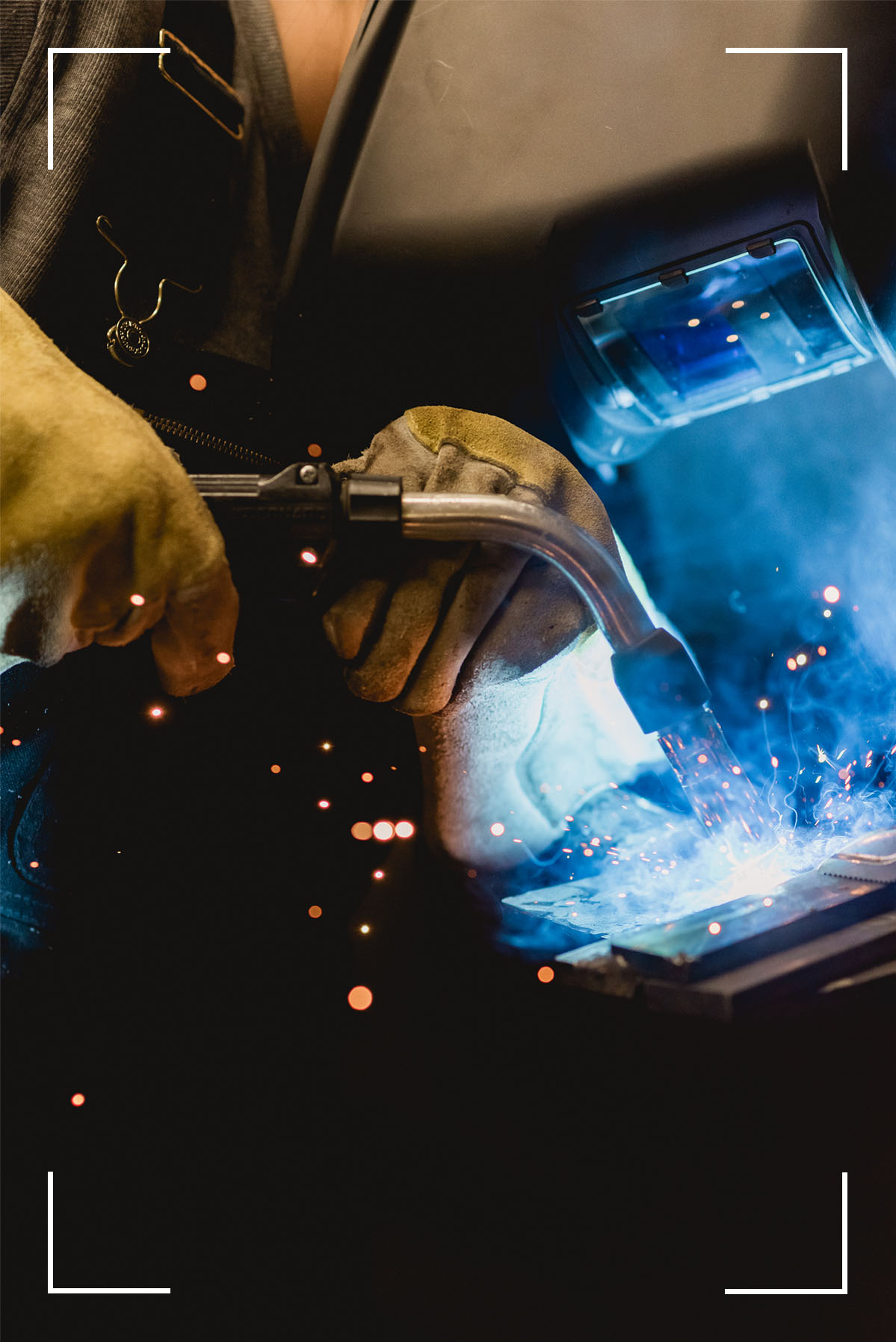
Indigenous tradespeople are building careers, showing up on job sites and delivering high-quality work every day in Alberta. Hear from a few about their experience in the field today.
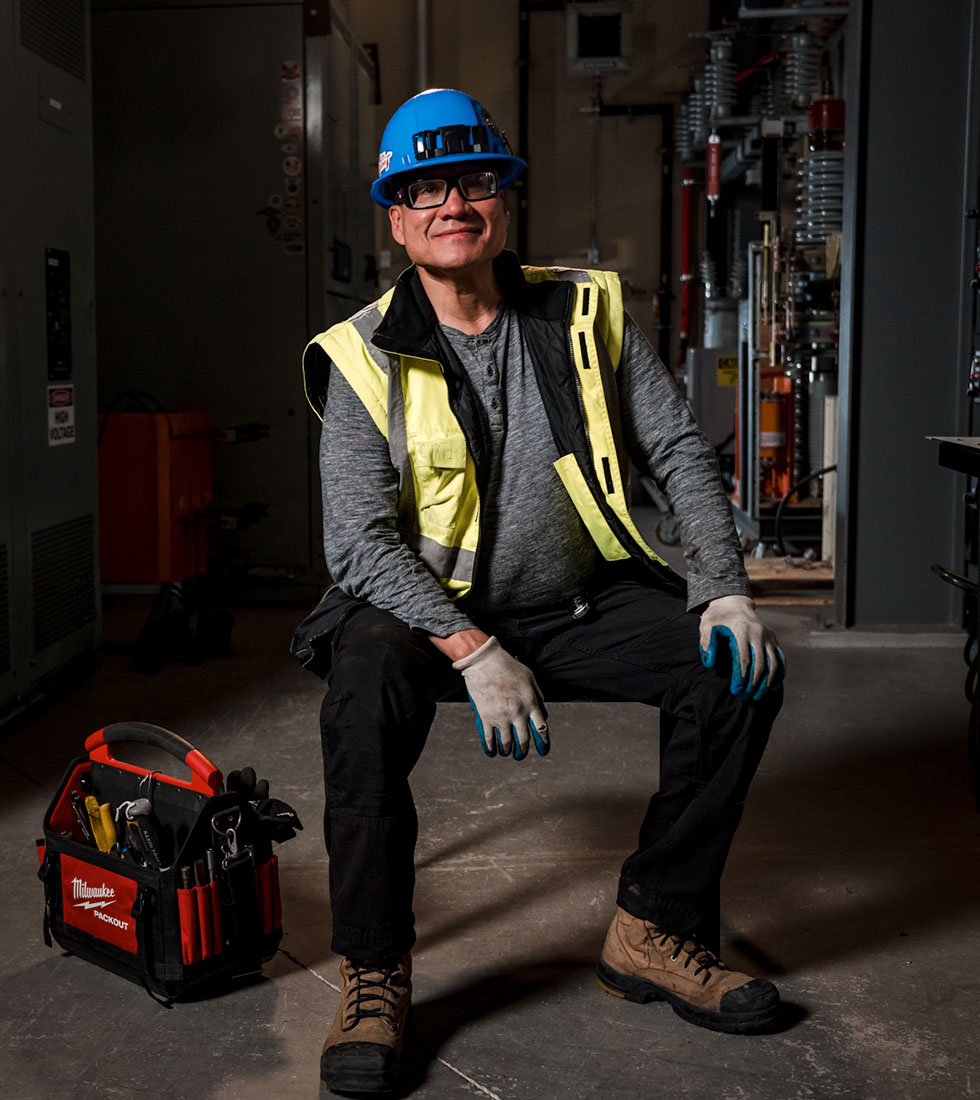
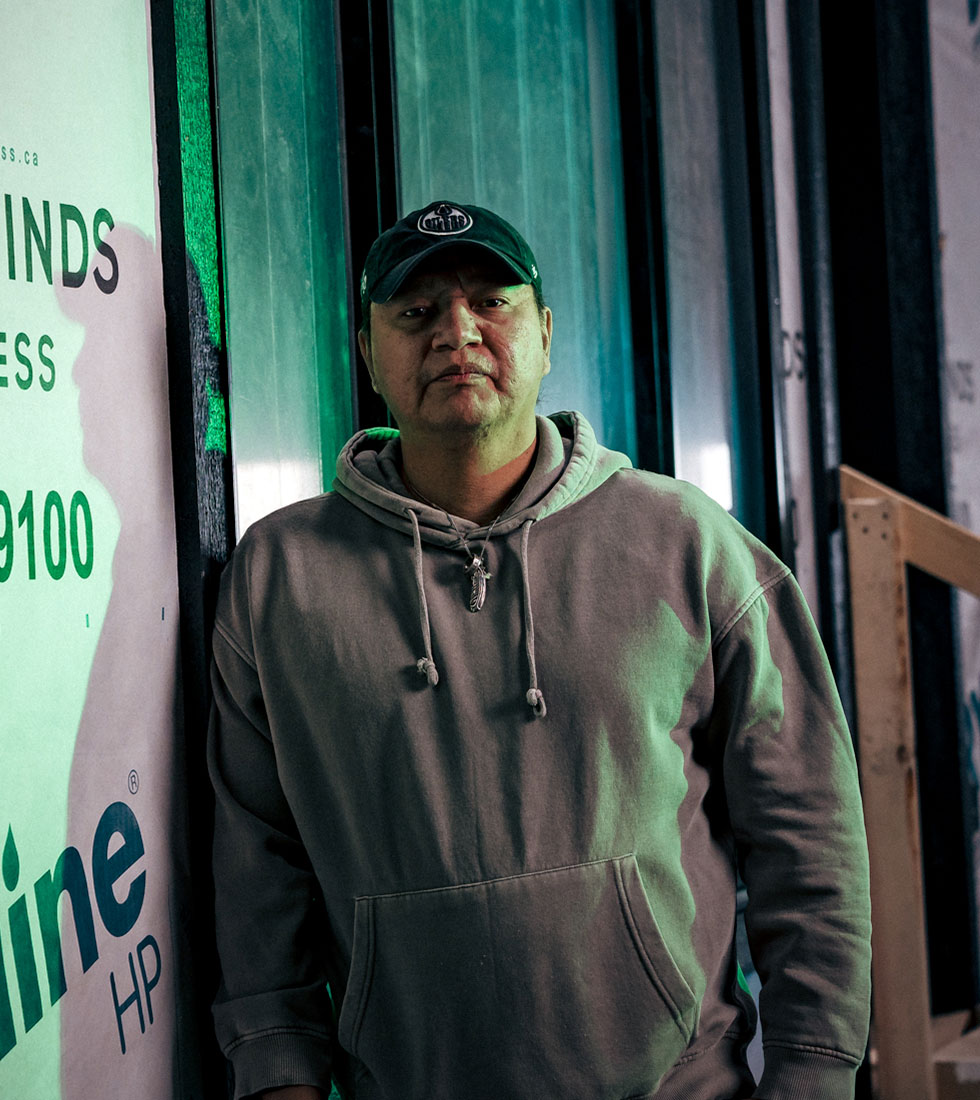
Electrician Apprentice (4th Year), Edmonton, Alberta From Sapotaweyak Cree Nation, Manitoba · Trade Winds to Success Graduate, 2020
Curtis Kematch came to Alberta with a decision already made. He had spent years in construction back in Manitoba — heavy labour, bricklaying, scaffolding — and he watched electricians on site in the summer heat, barely breaking a sweat, doing work that changed every day. He wanted that.
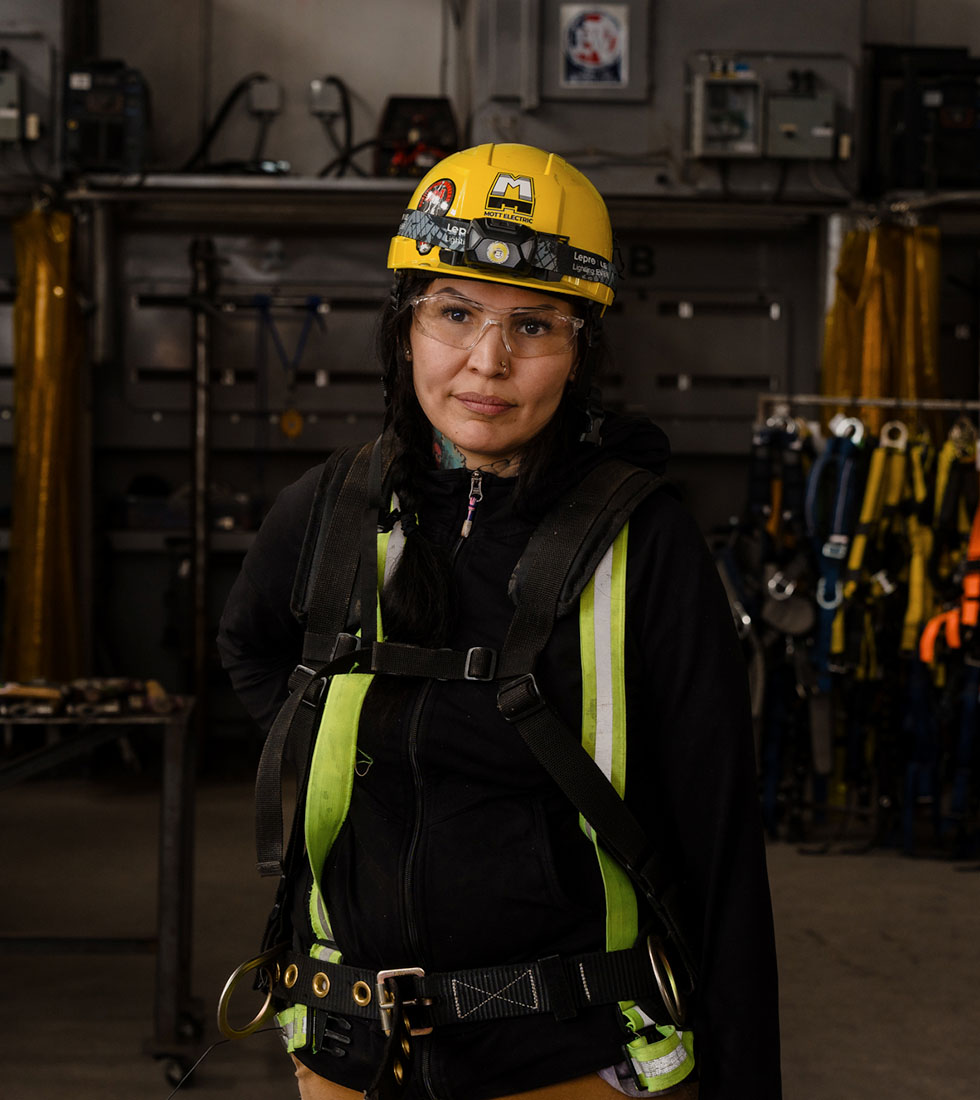
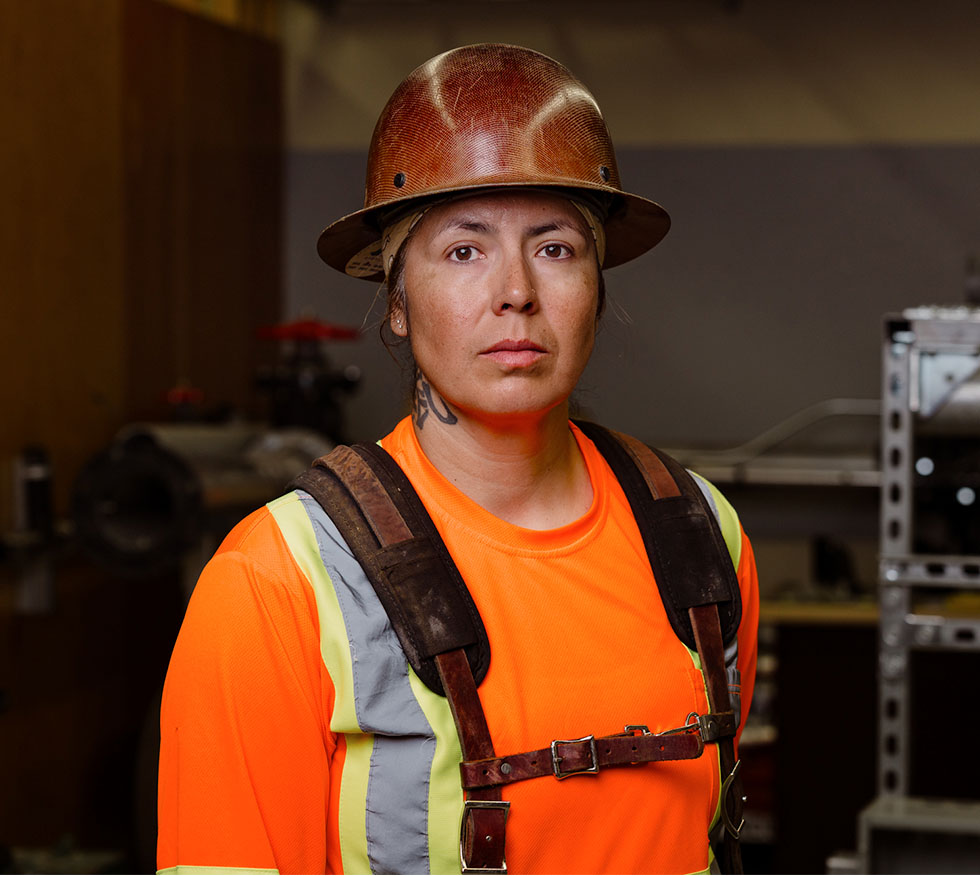
Carmen Maurice came to Trade Winds to Success as a labourer. She left as something rarer: a woman working toward journeyperson certification in not one trade, but two. Ironworking first, then electrical — each a separate program, a separate apprenticeship, a separate room to earn her place in.
Carpenter and Master of Architecture Candidate, Edmonton, Alberta Trade Winds to Success Graduate
Todd Pruden sees his life as a mosaic. Carpentry is one piece. His Bachelor of Design in Industrial Design from the University of Alberta is another. And the piece he has been working toward since childhood: an acceptance letter into the Master of Architecture (MArch) program at the University of Calgary arrived in his inbox about a month and a half ago.
Cheyenne Day Chief didn't go looking for the trades. She was at the Calgary Stampede, a single
mother in the middle of college, when a woman struck up a conversation and handed her a card
for Trade Winds to Success.
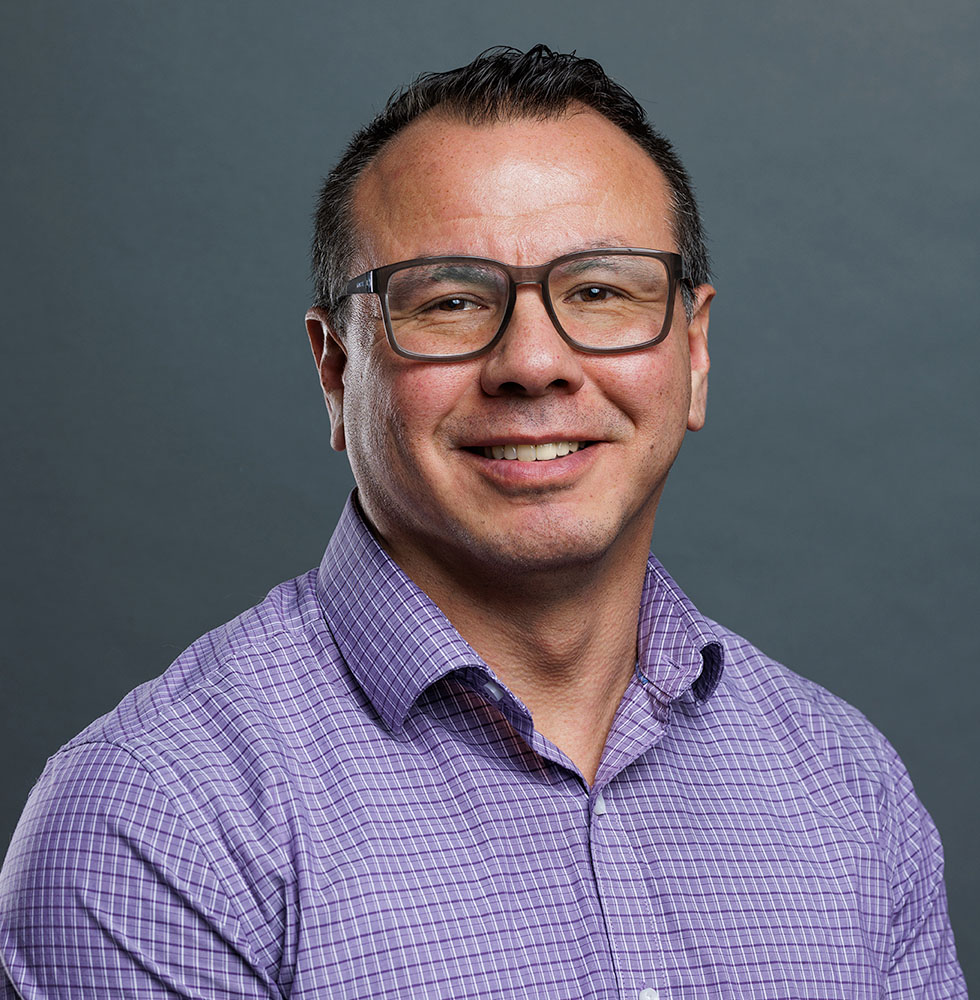
Paul and his brother Dave Gantar have been in construction long enough to watch the trades shortage go from a warning to a reality. As co-owners of Stanley Construction, an Edmonton-based general contractor, finding the right people for complex commercial projects isn't getting easier.
Walter Cardinal knows what it feels like to be unwanted on a job site. Not because of his work, not because of his attitude — but because of who he is. He spent years in the trades earning his place in rooms that weren't built with him in mind, carrying the weight of microaggressions that accumulated quietly until they weren't quiet anymore.
What you’ve heard. What the data says. These aren’t just stereotypes. They’re barriers and they’re costing employers real talent.
MYTH: Indigenous trades workers can’t be relied on to show up consistently.
REALITY: More than 6,000 Indigenous apprentices are actively registered in Alberta’s apprenticeship system. Apprenticeship requires consistent on-site hours, scheduled technical training blocks, and maintained standing — year over year. That’s not a one-time effort. That’s sustained, documented participation.
Source: Government of Alberta, AIT Registrar’s Report 2023–2024
MYTH: Indigenous trades workers don’t take safety seriously.
REALITY: Indigenous workers make up 6.6% of Alberta’s construction workforce — an industry where safety certification and compliance aren’t optional. Every worker on a regulated site has completed mandatory safety orientations and holds required certifications. Participation at this scale is the proof.
Source: BuildForce Canada
MYTH: Indigenous trades workers don’t stick around long-term.
REALITY: Apprenticeship is a multi-year commitment. The 6,000+ Indigenous apprentices currently active in Alberta’s system are progressing through training blocks and accumulating on-the-job hours — at the same time the industry faces historic retirement-driven turnover. That’s long-term engagement when the industry needs it most.
Sources: Government of Alberta AIT Statistics; BuildForce Canada
MYTH: Indigenous trades workers struggle with technical training and certification.
REALITY: 22% of Indigenous adults with a postsecondary credential hold a trades certificate or apprenticeship diploma — one of the most technically rigorous postsecondary pathways in Canada. These credentials aren’t handed out. They’re earned.
Trade Winds helps build a foundation that the Journeyperson credentials are built upon.
Source: Statistics Canada, 2021 Census
MYTH: Indigenous trades workers aren’t suited for leadership roles.
REALITY: Among Indigenous journeypersons in Canada, the most commonly certified trades are electrician (15%), carpenter (10%), and welder (8%) — the same trades that historically produce the highest proportion of foremen, site supervisors and crew leads. Journeyperson certification in these fields requires advanced technical competency and multi-year progression. Leadership is already built in.
Source: Statistics Canada, Indigenous People and the Trades, 2010–2020
What Employers Gain
HIRING TRADE WINDS GRADUATES ISN’T CHARITY. IT’S A COMPETITIVE ADVANTAGE
Workforce-ready graduates. Trade Winds to Success runs a program that is substantially longer and more hands-on than most pre-apprenticeship offerings. By the time a graduate enters your worksite, they've already proven their work ethic, their attendance and their ability to perform under real-world conditions. You're not taking a chance. You're hiring someone who has already shown up, every day, for five months and who arrives work-ready, with industry and safety certifications, trade-specific tools, and full PPE already in hand.
A pipeline when you need it most. Alberta's construction industry is facing a generational transition. Over 42,000 retirements are expected by 2033. Indigenous apprentices represent a growing, active, and motivated part of the workforce that can help close that gap — right now.
Workers who are invested. When Indigenous employees feel genuinely welcomed and supported on a job site, they bring deep loyalty, cultural values of community and reciprocity and a commitment that goes beyond the transaction. The very traits that bias misreads become assets when the environment earns them.
A partner who stays involved. When you hire a Trade Winds graduate, you don't hire alone. Trade Winds remains an active support resource — for you and for the graduate — throughout the apprenticeship. More people supporting the individual means better outcomes for everyone on the team.
Best Practices from Employer Partners
WE DON’T JUST SEND GRADUATES OUT THE DOOR. WE STAND BEHIND THEM.
That means we need employer partners who stand behind them too. Zero tolerance is not a policy statement. It’s a standard of conduct.
Racism on the job site — whether overt, casual, or disguised as humour — has real consequences. We have seen what happens when an employer responds to an incident by moving the Indigenous worker instead of addressing the source. The worker feels unsupported. They may leave. They lose hours. They lose income. The behaviour that drove them out stays.
Nothing changes. And silence is not neutral — it's permission.
We ask employer partners to hold this standard clearly:
Unintentional bias is a learning moment. Address it, correct it, and ensure it doesn’t happen again.
Intentional racism is a conduct issue. It requires real recourse, regardless of how long someone has worked for you or how skilled they are.
“That’s just how he is” is not an answer. All it does is teach the next generation that the behaviour is acceptable.
Safety has three dimensions — not one.
Physical safety is the floor, not the ceiling. Every worker on your site is entitled to all three:
Physical safety Standard PPE, hazard prevention, site compliance
Psychological safety Freedom from harassment, microaggressions, isolation
Cultural safety The ability to show up fully, let your skills speak for themselves and have your identity respected on the job.
Without all three, confidence can’t grow. And without confidence, your best workers won’t stay.
How Trade Winds Supports Employers
We’re a bridge — not a watchdog.
Trade Winds to Success brings more than 20 years of experience supporting Indigenous apprentices and the employers who hire them. We understand the cultural context that employers sometimes don't have — and we're here to help navigate it, not judge it.
Extended family is not the same as immediate family — and that matters. Indigenous communities often operate on extended family structures where cousins, second cousins, and community members are as close as siblings. When a worker needs time for a funeral or ceremony that falls outside conventional HR definitions of "immediate family, it can look like an attendance issue when it isn't. Trade Winds can help you understand the context and respond with the support that keeps good people on your team.
Your graduate will talk to us when they won’t talk to you. That’s not a criticism — it’s just human. Sometimes a worker won’t tell their employer something out of pride, embarrassment, or distrust built from past experiences. They may tell us. And when they do, we work with you — quietly, collaboratively — to find a solution before a small problem becomes a reason to quit.
We ask you to invest like it’s 1985. The trades were built on a model where employers saw apprentices as long-term investments in craft — not interchangeable labour to be hired and released with the bid cycle. That model worked. It built the infrastructure Alberta depends on. We're asking employer partners to return to it: invest in the person, develop the skill, and watch the loyalty follow.
Be Part of the Shift
Two things are true at the same time: Alberta's trades industry needs skilled workers. Indigenous tradespeople are skilled and ready.
Closing the gap starts with a decision to see past the bias — to judge by the work, not the assumptions about the person doing it.
Employers, colleagues, and industry leaders all have a role to play. The shift happens when enough people decide to be part of it — and it starts with who sees this.
Share this campaign with your network.
We've made it easy. Copy the message to the right, make it your own, and post it to LinkedIn with the campaign video. Every share puts this in front of the hiring managers, site supervisors, and industry leaders who need to see it.
Suggested LinkedIn post — feel free to tailor it:
Alberta's trades industry is facing a serious skills shortage. The talent exists — and a lot of it is Indigenous.
Trade Winds to Success is doing the work to train, certify, and place skilled Indigenous tradespeople with employers across Alberta. What they need from us is job sites where they can actually thrive.
I'm sharing this campaign because I believe the industry is stronger when we see the skill in front of us — not the bias we brought with us.
Watch the stories. Share them. And if you're an employer, find out how to become a partner.
Trade Winds to Success is a registered non-profit. Donations fund training, certifications, tools, and PPE for Indigenous apprentices who need it most. Tax receipts issued.
Electrician Apprentice (4th Year), Edmonton, Alberta, From Sapotaweyak Cree Nation, Manitoba · Trade Winds to Success Graduate, 2020
Curtis Kematch came to Alberta with a decision already made. He had spent years in construction back in Manitoba — heavy labour, bricklaying, scaffolding — and he watched electricians on site in the summer heat, barely breaking a sweat, doing work that changed every day. He wanted that. He graduated from Trade Winds to Success in 2020, was hired as an electrician apprentice, and has been building his career in commercial electrical ever since.
He is now a fourth-year commercial electrician who installed the electrical rack for the Mutart LRT guideway — alone, from mid-December to mid-March, in the cold, because nobody else wanted the job. He didn't rush it. Didn't cut corners. "When you make a ninety-degree bend, it has to be ninety, or it won't fit," Kematch says. "We measure to the sixteenth of an inch, not ‘close enough’ but exactly what it's supposed to be."
Fifteen years in construction means Curtis has encountered bias on the job. He doesn't avoid the subject. "I have come across people who didn't admit they were racist but treated me that way," he says. "They'll try and expect you to have a reaction. My best reaction to that is no reaction." He has thought carefully about where that composure comes from. "If you can be disrespected by a word, you give that word more power than you give your own choice, your own free will." He absorbs it, and moves on. "I take it in, and it ends with me."
What he holds onto instead is the work itself. "I'm happy at the end of the day when everyone goes home in the same condition they came in," he says. "I know what I installed is safe and reliable. Someone used something I worked on today, and they're having their life a bit easier because of that."
"You carry something long enough, it doesn't become heavy. You just get stronger."
— Curtis Kematch, Electrician Apprentice
Carmen Maurice
Apprentice Electrician & Ironworker
Carmen Maurice came to Trade Winds to Success as a labourer. She left as something rarer: a woman working toward journeyperson certification in not one trade, but two. Ironworking first, then electrical — each a separate program, a separate apprenticeship, a separate room to earn her place in. Originally from English River First Nation in Patuanak, Saskatchewan, she's now a first-year in both, dispatched through the union and working commercial electrical while the ironworking years still live in her hands.
The two trades pull in different directions, and Carmen knows the difference in her body. Ironworking is physical in a way that takes weeks to grow into. Electrical lives in your head. What stays the same across both is the height — Carmen has worked at elevation since the beginning, and it's never bothered her. She used to photograph the sunrise from the beams every morning.
She has been underestimated in both — as a woman, and as an Indigenous person, and the two don't always separate cleanly. Early in her ironworking days, a colleague refused to work with her — screamed it across the slab in front of everyone on site.
She was reassigned rather than him. The one who couldn't work with her kept his job; Carmen was the one who moved. It's a pattern Indigenous tradespeople know well — the path of least resistance runs straight through them.
She went back to her foreman, got reassigned, and kept showing up. Two weeks later, some of the same crew admitted they'd expected her to quit. "All that was in my mind," she says, "is journeywoman ticket. So I kept going and I blocked everything else out."
She knows what people assume about Indigenous women in the trades, that they won't show up, that they can't handle it, and she's decided her answer to that is to keep going until the assumption runs out of room.
"I feel that we're mostly looked down upon," she says. "But you just got to prove them wrong and keep going to work every day."
She writes her goals on paper and hangs them where she can see them, because the destination has to stay visible. She wants her journeywoman ticket in electrical. After that, her own business. What she wants for other Indigenous women watching is to know the path is real, not easy, not without its costs, but real. She's a single mother of two. The stakes are not abstract.
"If somebody tells me I can't do it, I'll go out there and prove them wrong."
— Carmen Maurice, First-Year Ironworker & First-Year Electrician
Todd Pruden
Carpenter & Master of Architecture Candidate, Edmonton, Alberta Trade Winds to Success Graduate
Todd Pruden sees his life as a mosaic. Carpentry is one piece. His Bachelor of Design in Industrial Design from the University of Alberta is another. And the piece he has been working toward since childhood: an acceptance letter into the Master of Architecture (MArch) program at the University of Calgary arrived in his inbox about a month and a half ago. "This is a lifetime goal and a dream come true," Pruden says.
He wanted what he calls "x-ray eyes" — the ability to look at a building and understand not just how it should look, but exactly what it takes to build it: cost, scheduling, manpower, craft. He found Trade Winds to Success by serendipity, finished the program, and was given something most apprentices don't get: a company that handed him the full scope of a project, from excavation and footings to framing, insulation, and ceiling work. He has now written and passed his provincial and interprovincial trade school exams.
He was, at one point, the only Indigenous tradesperson out of 200 at a company. He noticed. "I felt it was so bizarre. And I think the more Indigenous tradespeople that are visible, the more we build each other up. There's so much potential here. But we need to be supported — and to support one another."
"You don't have to overextend yourself to fit another person's view. Understand the task. Master it. Do your best. They'll come back and say: you did a good job today."
— Todd Pruden, Apprentice Carpenter
Cheyenne Day Chief
General Foreman, Ironworker
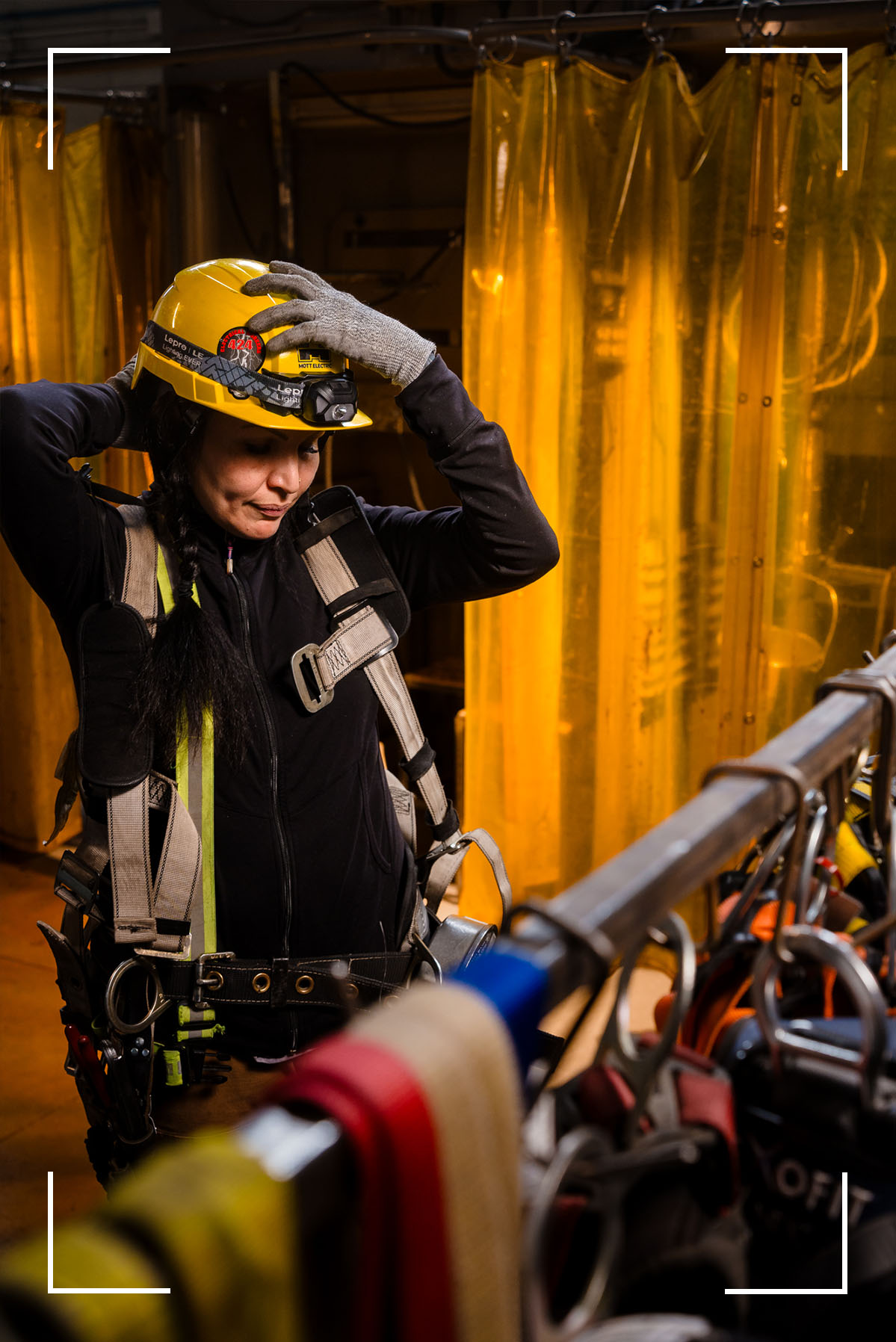
Cheyenne Day Chief didn't go looking for the trades. She was at the Calgary Stampede, a single mother in the middle of college, when a woman struck up a conversation and handed her a card
for Trade Winds to Success. She didn't think much of it at the time. Two weeks later, she called.
Two days after that, she was accepted. Nineteen years into the trade, she is a General Foreman
overseeing crews of 10 to 20 on some of Alberta's most demanding ironwork sites.
She chose ironworking for the simplest reason: it paid the most. She didn't know what an
ironworker was when she walked into that intake meeting. What she knew was that she had two
kids to raise on her own and a decision to make. Once she started, she couldn't walk away. "Once
the money started rolling in," she says, "I just couldn't get out of it."
What she didn't anticipate was how long she would stay, or how far she would go. For most of her first 13 years, she was the only woman on crews of 15 to 60. She built her way up through
every level until she reached General Foreman. It hasn't been without friction. Her leadership
role required overcoming gender biases, especially from men who were hesitant to take direction
from a woman. Ask her whether being Indigenous or being a woman has been the bigger challenge on the job, and she doesn't hesitate. Being a woman.
She has seen bias directed at Indigenous colleagues — moments where their absences drew
commentary that double standards on the same site didn't. She pushed back quietly but clearly,
telling coworkers they didn't have the full picture and that it wasn't their conversation to have. It
was a constant position to hold — defending people she understood in rooms that didn't, while
knowing the situation was complicated. She held both truths at once, and she held her ground.
Now, as General Foreman, she is the one setting the tone. She witnessed unfair criticism directed
at Indigenous colleagues, often defending them quietly but firmly. She sets a strong tone on her
crews about respect and professionalism, addressing conflicts swiftly.
What she wants employers to understand — what nineteen years have taught her — is that
Indigenous workers bring dedication and resilience that go beyond what a resume can show.
Indigenous workers give their best effort. They leave what's happening at home at the gate. They
take direction without argument. They work hard not because of what the paycheck says but
because that's how they show up. "When an Indigenous person shows up," she says, "they give it
their all, regardless of what they're going through."
Her children kept her going when the environment was difficult. Her children served as a
motivation, and they have followed in skilled trades and professional careers. Her daughter is
weeks away from her Red Seal in hairdressing. Her son just graduated from Trade Winds to
Success and is working as an electrician apprentice. Cheyenne encouraged him toward electrical,
a trade she believed would give him a strong future. "You're going to make more money than
mom," she told him. For a young Indigenous person unsure whether the trades are for them, her
answer is direct: Cheyenne encourages Indigenous youth to see trades as a viable and expanding
path with many resources and opportunities. "You're not stuck," she says.
Leading by example wasn't a strategy. It was just how she lived. She models leadership and
perseverance, showing that success is possible despite obstacles.
"When an Indigenous person shows up, they give it their all, regardless of what they're going through."
— Cheyenne Day Chief, General Foreman, Ironworker
Paul Gantar
Co-Owner, Stanley Construction
Paul and his brother Dave Gantar have been in construction long enough to watch the
trades shortage go from a warning to a reality. As co-owners of Stanley Construction, an
Edmonton-based general contractor, finding the right people for complex commercial
projects isn't getting easier. That search is what brought them to Trade Winds to
Success, and what they found there surprised them.
Stanley's projects are complex, multi-trade and multi-phase, demanding problem
solvers who can think on their feet without losing ground. When they post a position,
they're inundated with applicants. Most don't make the cut. "We need people who are
willing to work, show up consistently and have a skill set," Paul says. "We're not
satisfied with mediocre."
That's what drew Stanley to Trade Winds to Success. When a Trade Winds graduate
shows up on a resume, Paul knows two things immediately: they've already been
exposed to the tools and the industry, and more importantly, they want to be there. That
second part is harder to find than most employers admit.
Today, 20% of Stanley's field staff are Trade Winds graduates. Some have been
with the company for five years or more. All are on their way to becoming
journeypersons, with the goal of becoming the site supervisors and
superintendents who run Stanley's construction projects.
The culture Paul and Dave have built at Stanley doesn't make room for bias. Their
parents immigrated from Europe, built a life from scratch and passed that approach on.
On Stanley sites, the standard is the same for everyone. They expect hard work,
integrity, honesty and respect. Where you come from is not part of the equation. "We
don't care where you came from, as long as you're committed to doing the work and
doing it well," Paul says. When disrespect surfaces, from a subcontractor, a consultant,
anyone, it gets addressed immediately. Everyone on that site has the right to feel safe
enough to perform.
What Paul wants other employers to understand is straightforward: stop overthinking it.
Trade Winds graduates arrive with hands-on training, real exposure and the drive to
build a career, not just fill a shift. "Give them a try," he says. And beyond the program
itself, his advice to any company trying to grow is the same philosophy that built
Stanley: take your time, find the right people, teach them properly and invest in them
like it matters. Because it does.
"Take your time. Find the right people, teach them properly, get them in there slowly, watch them closely, be a mentor. That's how we all grew up in the industry."
— Paul Gantar, Co-Owner, Stanley Construction
Walter Cardinal
Manager, Employer & Community Engagement
Walter Cardinal knows what it feels like to be unwanted on a job site. Not because of his work, not because of his attitude — but because of who he is. He spent years in the trades earning his place in rooms that weren't built with him in mind, carrying the weight of microaggressions that accumulated quietly until they weren't quiet anymore. "I felt like I had to try harder to do the same amount of work to get accepted," he says. "It honestly made me not want to be there."
He stayed long enough to understand the pattern. Racism on job sites rarely arrives as outright confrontation. More often it comes in small, deniable moments — a nickname handed out on day one, a joke that lands at your expense, an assumption made before you've picked up a tool. Walter didn't have a word for it when he first started. What he knew was that almost every site he worked on, he was given a nickname rooted in his heritage rather than his character. "You're not just making a joke," he says. "You're making fun of me as a person."
Those experiences changed him. They changed how he saw the trades, and for a long time they made him feel like he didn't belong in them. Eventually they brought him to a different kind of decision — not to leave the industry, but to change what he could from within it. He found his way to Trade Winds to Success, where he now works as Manager of Employer and Community Engagement. The job is exactly what it sounds like: building relationships with employers, having the hard conversations, and making sure the job sites Trade Winds graduates walk onto are ones they can actually thrive on.
What Walter wants employers to understand is that the cost of inaction is real. Microaggressions accumulate. A worker who feels unwanted will eventually show it — not because they've failed, but because no one can perform well in an environment that signals they don't belong. "If you feel unwanted on a job site," he says, "that will manifest itself in work ethic and probably how you interact with your coworkers and how you view leadership." The problem isn't the worker. The problem is the culture that was allowed to form around them.
The solution, in Walter's view, starts at the top. Leadership sets the tone. Stereotypes brought into a workplace trickle down, fracture the culture, and ultimately cost the employer. Zero tolerance isn't a policy document — it's a daily practice, and silence is its opposite. "Silence and acceptance of what is going on that may be racist is enabling it," he says. "Don't sit around and wait for somebody else to go first."
Alberta is facing a skilled trades shortage that isn't going away. Indigenous youth between 18 and 35 are the fastest growing demographic willing to enter the workforce — and they are trained, certified, and ready. What stands between them and a successful career is often not skill. It's the culture waiting for them on the other side of the hire. Walter has seen what happens when employers get that culture right. Indigenous tradespeople climb. They become team leaders, foremen, journeypersons. They stay. "We partner with those employers," he says, "that want to be part of the solution."
"Microaggressions accumulate. Workers who feel unwanted eventually leave. Employers who get the culture right keep skilled people and watch them grow. The choice is that straightforward."
— Walter Cardinal, Manager, Employer & Community Engagement